Here is a disheartening story that just came over the wire - Viraj Shah was caught with 1.8 million pounds/ over $2 million worth of counterfeit drugs in London, and received a 51 week suspended prison sentence.
Any person possessing that much counterfeit medication is likely to have considerable assets, if only to purchase and sell at his point on the supply chain. He would also likely possess at least some information relating to his supply chain, such as who bought counterfeit drugs from him and who may have sold counterfeit drugs to him. And yet, there is no talk of a fine or even any certainty of Mr. Shah serving one day in prison. And, it does not appear from the article that Mr. Shah relayed any useful information concerning his cohorts to prosecutors.
Now maybe there is information on this case that the public is not aware of yet. Perhaps this man did inform on his partners in crime sotto voce, or maybe the state's case had a fatal flaw. But there is no evidence that any deal was made - the man was prosecuted, tried, convicted and sentenced.
The dangers of counterfeit medication are manifest and well-documented. Aside from possibly being ineffective and causing indirect harm, counterfeit medicines may well contain incorrect dosages or be made out of substances like cement powder - or worse.
The goals of criminal law enforcement are to mete out justice, rehabilitate the criminal and provide disincentives for the criminal and the public to engage in similar future behavior. Given the reckless dangers involved in dealing fake meds, it is clear that the crime well exceeded the very light punishment. There is also no evidence that Mr. Shah has been rehabilitated or even feels remorse for his actions. And as far as providing disincentives, the public has now been made aware of a lucrative career with extremely limited downside. So until the state gets serious about getting tough on people like Mr. Shaw, this problem will not get better.
With this publicity, it will likely get worse.
UPDATE: The press release from the U.K. Medicines and Healthcare products Regulatory Agency (MHRA) describes how Mr. Shah got caught (inspection of consignments at Heathrow Airport) and the sentencing process (Mr. Shah plead guilty, and will perform community service in addition to his suspended sentence).
Showing posts with label medication. Show all posts
Showing posts with label medication. Show all posts
Thursday, 3 July 2008


Thursday, 26 June 2008
Counterfeiting and the Developing World
The industrialized world might look at the developing world as a source of counterfeit crime, and that perception has some justification. After all, industry in the developing world has little capital for research and development, and the cheaper and more lucrative (if unlawful) route to development is often through counterfeiting goods and impinging on intellectual property rights.
But there is another side of the story, particularly in the realm of pharmaceutical products. In a region where up to 30% of the pharmaceuticals are counterfeit, citizens of third world countries suffer greatly when fake medicines enter their own health product supply chain. Nobody in these countries is immune from the risks of counterfeit drugs. For example, this article cites that the head of drug quality in Nigeria, Dr Dora Akunyili, suffered when her own sister died as a result of taking a counterfeit drug. But with weak central governments and the backing of organized crime, a successful effort is likely to be based on international cooperation.
Check out the article for an informative look at the issue.
But there is another side of the story, particularly in the realm of pharmaceutical products. In a region where up to 30% of the pharmaceuticals are counterfeit, citizens of third world countries suffer greatly when fake medicines enter their own health product supply chain. Nobody in these countries is immune from the risks of counterfeit drugs. For example, this article cites that the head of drug quality in Nigeria, Dr Dora Akunyili, suffered when her own sister died as a result of taking a counterfeit drug. But with weak central governments and the backing of organized crime, a successful effort is likely to be based on international cooperation.
Check out the article for an informative look at the issue.
Tuesday, 27 May 2008
50% of online medication is fake
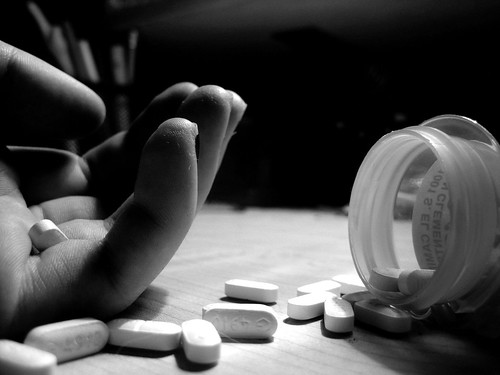 According to the World Health Organisation, 50% of the drugs sold online are fakes.
 Moreover, the WHO reported in November 2006 that 10% of medicines in Russia were phoney, 25% in India, 35% in Lebanon, 40% in Peru, 48% in Nigeria and 70% in Angola.
WHO estimates that of the approximately one million people who die of malaria every year, 200,000 could be saved if authentic drugs were distributed.
Dodgy medicines are just one part of a massive global trade in counterfeit goods that has developed as capitalists in marginalised countries scramble to catch up with their First World counterparts.
In a February 1 announcement that Australia will join negotiations for a new international Anti-Counterfeiting Trade Agreement, trade minister Simon Crean noted a recent OECD report that international trade in counterfeit and pirated goods is worth approximately US$200 billion annually.
Discounted death
Whether it be fake condoms, adulterated alcohol, car or aircraft spare parts or copies of drugs, the rise of “counterfeit” capitalism poses a grave danger to ordinary people. It marks a return to the wild days of capitalist fakery that Marx observed in England in the 1860s.
Nineteen people died in Turkey in March 2005 after drinking impure raki (an alcoholic beverage). In Russia, 53,000 people have died from poisonous liquor. According to the OECD, the proportion of phoney spare parts in world trade rose from 5% in 2000 to 10% in 2005.
The range of counterfeits is expanding, including: toys, textiles, software, books, musical and film piracy, bank notes, food products (mineral water, apple juice, tea, alcohol), toothpaste, various perfumes and cosmetics, electrical goods and their spare parts and cigarettes.
Examples of counterfeit “intellectual property” include fake Chinese-made Yamaha motor scooters, complete with the Yamaha logo and a fake “BP” service station that the World Customs Organisation discovered in the Caucasus selling contraband fuel.
The huge trade calls into question the entire structure of ownership and control maintained by capitalist states. It is also likely that a certain amount of fakery is tolerated in order to keep the cost of living bearable.
Fake medicines carry multiple dangers. They may contain harmful or even fatal ingredients, or not an effective amount of the correct ingredient.
Interpol believes that the trade in counterfeits has grown eight times faster than world trade since the early ’90s. The US reported an 83% increase in seizures in fiscal year 2006 — a record for US customs. The European Commission reported a 330% increase in seizures in the EU between 2005 and ’06. As only between 3-5% of goods entering the EU are subject to control, clearly fakes are flooding in.
Patents and black markets
Giant pharmaceutical companies justify the high prices of their brand name products by citing development costs. The gigantic profit premiums secured through their patent rights are referred to as “technological rent”. That is, price gouging made possible by restricting access to the technology.
However, in the internet age, characterised by globalisation and complex logistical networks it is easy to get around these patent barriers. If drugs are not paid for through a form of social security coverage then patent barriers artificially create a demand and then a black market to serve it.
For example, Acomplia (rimonabant) — an anti-obesity drug produced by Sanofi Aventis — cost 800 million euros and took 10 years of research. It was copied before it was put on the market! Fake Viagra can be sold at prices 70% below that of the real thing.
A kilo of heroin produces a 200% profit in Europe, but a kilo of Viagra’s active ingredient from India creates a profit of more than 2000%, according to a former Scotland Yard detective quoted by the May 26, 2007 Le Monde.
According to the European Commission, there is less than 2000 euros profit in 1 kilogram of cannabis sold in Europe, while 1 kilo of pirated CDs produces 3000 euros profit.
Five cases of fake medicines bought in pharmacies have been identified in Britain between 2005 and 2007. In France, one case occurred in 2004 involving false contact lenses, similar to the original but not sterilised. The proposed EU liberalisation of pharmacies will further weaken protection against these scams.
The criminal gangs involved can easily sell small amounts safely on the internet, which is legal in the US and Canada. The approximately 40 million US citizens not covered by health insurance are ready targets.
Legal and illegal capitalists
But the counterfeiters can only move big-profit, wholesale amounts of product by breaking into legal distribution channels through deception. To confuse detection counterfeit goods usually pass through several countries before arriving at their final destination.
Often fake “spare parts” are transported, partially assembled in one country and then completed in another. Major ports and international airports then handle them as legitimate cargo. Fakes are sometimes mixed with authentic products in the same consignment.
Logically, trade on this scale could not occur without the collaboration of transport companies and other “legitimate” capitalists turning a blind eye, at least. The line between legitimate and illegitimate capital is very blurred.
Asia is the main production source of counterfeits. On May 23, 2007, Le Figaro reported that 86% of 2006 EU seizures of counterfeits originated in China. Counterfeiting employs 3-5 million Chinese workers and accounts for 8% of GDP. Russia, South American, African and some European countries are also producers.
In Buenos Aires, the huge Salada market, covering 20 hectares with 15,000 stands, sells 100 million garments per year — 50% are said to be fake, according to an EU report.
Given the scale of counterfeiting, the legal response from major states has been quite meagre. This raises the question of whether a certain amount of counterfeiting is tolerable to keep a lid on monopoly price power wielded by the big business patent holders.
Mercenary police forces
Unhappy with state responses, the major corporations are banding together to develop their own private intelligence forces to trace and stifle counterfeiters. Major players are the Business Software Alliance (BSA); the Union of Manufacturers; the Motion Picture Association of America; and the International Federation of Phonographic Industries. The BSA pays for investigators and participates in raids along with police against illicit software manufacturers.
They have head-hunted police operatives from various countries to conduct field investigations and provide evidence to authorities. These mercenary police forces work closely with state authorities, providing logistical support such as vehicles and analytical laboratories where countries have limited financial resources. The BSA also recruits expert witness for court cases or parliamentary commissions involved in drafting international treaties.
Fakery has always been a feature of capitalism. In Capital, Karl Marx wrote about the 1860 British law preventing the adulteration of food and drink. It was “an inoperative law, as it naturally shows the tenderest consideration for every Free-trader who determines by the buying or selling of adulterated commodities ‘to turn an honest penny’. The
[parliamentary] Committee itself formulated more or less naively its conviction that Free-trade meant essentially trade with adulterated, or as the English ingeniously put it, ‘sophisticated’ goods.”
The new rise in piracy reflects the earlier era of capitalist
accumulation when English sea captains like Drake, Grenville, Raleigh and Morgan brought home Spanish gold for Queen Elizabeth I. They are heroes in establishment history books, however they were never anything more than thieves. But the bulging Spanish galleons they plundered were also owned by thieves.
The situation is similar today where mafia smugglers and brutal sweatshop operators producing modern day “sophisticated” goods are carving from the flesh of workers their own primitive accumulation of capital in competition with bloated multinational corporations.
If patents simply did not exist, then goods could be produced as cheaply as possibly and distributed to those needing them. In such a world, profit would be impossible. However, it would mean that the world’s productive capacity, currently distorted and degraded by patent laws and customs barriers, would be freed to serve the needs of all humanity.
Story via Green Left
Photo credit
WHO estimates that of the approximately one million people who die of malaria every year, 200,000 could be saved if authentic drugs were distributed.
Dodgy medicines are just one part of a massive global trade in counterfeit goods that has developed as capitalists in marginalised countries scramble to catch up with their First World counterparts.
In a February 1 announcement that Australia will join negotiations for a new international Anti-Counterfeiting Trade Agreement, trade minister Simon Crean noted a recent OECD report that international trade in counterfeit and pirated goods is worth approximately US$200 billion annually.
Discounted death
Whether it be fake condoms, adulterated alcohol, car or aircraft spare parts or copies of drugs, the rise of “counterfeit” capitalism poses a grave danger to ordinary people. It marks a return to the wild days of capitalist fakery that Marx observed in England in the 1860s.
Nineteen people died in Turkey in March 2005 after drinking impure raki (an alcoholic beverage). In Russia, 53,000 people have died from poisonous liquor. According to the OECD, the proportion of phoney spare parts in world trade rose from 5% in 2000 to 10% in 2005.
The range of counterfeits is expanding, including: toys, textiles, software, books, musical and film piracy, bank notes, food products (mineral water, apple juice, tea, alcohol), toothpaste, various perfumes and cosmetics, electrical goods and their spare parts and cigarettes.
Examples of counterfeit “intellectual property” include fake Chinese-made Yamaha motor scooters, complete with the Yamaha logo and a fake “BP” service station that the World Customs Organisation discovered in the Caucasus selling contraband fuel.
The huge trade calls into question the entire structure of ownership and control maintained by capitalist states. It is also likely that a certain amount of fakery is tolerated in order to keep the cost of living bearable.
Fake medicines carry multiple dangers. They may contain harmful or even fatal ingredients, or not an effective amount of the correct ingredient.
Interpol believes that the trade in counterfeits has grown eight times faster than world trade since the early ’90s. The US reported an 83% increase in seizures in fiscal year 2006 — a record for US customs. The European Commission reported a 330% increase in seizures in the EU between 2005 and ’06. As only between 3-5% of goods entering the EU are subject to control, clearly fakes are flooding in.
Patents and black markets
Giant pharmaceutical companies justify the high prices of their brand name products by citing development costs. The gigantic profit premiums secured through their patent rights are referred to as “technological rent”. That is, price gouging made possible by restricting access to the technology.
However, in the internet age, characterised by globalisation and complex logistical networks it is easy to get around these patent barriers. If drugs are not paid for through a form of social security coverage then patent barriers artificially create a demand and then a black market to serve it.
For example, Acomplia (rimonabant) — an anti-obesity drug produced by Sanofi Aventis — cost 800 million euros and took 10 years of research. It was copied before it was put on the market! Fake Viagra can be sold at prices 70% below that of the real thing.
A kilo of heroin produces a 200% profit in Europe, but a kilo of Viagra’s active ingredient from India creates a profit of more than 2000%, according to a former Scotland Yard detective quoted by the May 26, 2007 Le Monde.
According to the European Commission, there is less than 2000 euros profit in 1 kilogram of cannabis sold in Europe, while 1 kilo of pirated CDs produces 3000 euros profit.
Five cases of fake medicines bought in pharmacies have been identified in Britain between 2005 and 2007. In France, one case occurred in 2004 involving false contact lenses, similar to the original but not sterilised. The proposed EU liberalisation of pharmacies will further weaken protection against these scams.
The criminal gangs involved can easily sell small amounts safely on the internet, which is legal in the US and Canada. The approximately 40 million US citizens not covered by health insurance are ready targets.
Legal and illegal capitalists
But the counterfeiters can only move big-profit, wholesale amounts of product by breaking into legal distribution channels through deception. To confuse detection counterfeit goods usually pass through several countries before arriving at their final destination.
Often fake “spare parts” are transported, partially assembled in one country and then completed in another. Major ports and international airports then handle them as legitimate cargo. Fakes are sometimes mixed with authentic products in the same consignment.
Logically, trade on this scale could not occur without the collaboration of transport companies and other “legitimate” capitalists turning a blind eye, at least. The line between legitimate and illegitimate capital is very blurred.
Asia is the main production source of counterfeits. On May 23, 2007, Le Figaro reported that 86% of 2006 EU seizures of counterfeits originated in China. Counterfeiting employs 3-5 million Chinese workers and accounts for 8% of GDP. Russia, South American, African and some European countries are also producers.
In Buenos Aires, the huge Salada market, covering 20 hectares with 15,000 stands, sells 100 million garments per year — 50% are said to be fake, according to an EU report.
Given the scale of counterfeiting, the legal response from major states has been quite meagre. This raises the question of whether a certain amount of counterfeiting is tolerable to keep a lid on monopoly price power wielded by the big business patent holders.
Mercenary police forces
Unhappy with state responses, the major corporations are banding together to develop their own private intelligence forces to trace and stifle counterfeiters. Major players are the Business Software Alliance (BSA); the Union of Manufacturers; the Motion Picture Association of America; and the International Federation of Phonographic Industries. The BSA pays for investigators and participates in raids along with police against illicit software manufacturers.
They have head-hunted police operatives from various countries to conduct field investigations and provide evidence to authorities. These mercenary police forces work closely with state authorities, providing logistical support such as vehicles and analytical laboratories where countries have limited financial resources. The BSA also recruits expert witness for court cases or parliamentary commissions involved in drafting international treaties.
Fakery has always been a feature of capitalism. In Capital, Karl Marx wrote about the 1860 British law preventing the adulteration of food and drink. It was “an inoperative law, as it naturally shows the tenderest consideration for every Free-trader who determines by the buying or selling of adulterated commodities ‘to turn an honest penny’. The
[parliamentary] Committee itself formulated more or less naively its conviction that Free-trade meant essentially trade with adulterated, or as the English ingeniously put it, ‘sophisticated’ goods.”
The new rise in piracy reflects the earlier era of capitalist
accumulation when English sea captains like Drake, Grenville, Raleigh and Morgan brought home Spanish gold for Queen Elizabeth I. They are heroes in establishment history books, however they were never anything more than thieves. But the bulging Spanish galleons they plundered were also owned by thieves.
The situation is similar today where mafia smugglers and brutal sweatshop operators producing modern day “sophisticated” goods are carving from the flesh of workers their own primitive accumulation of capital in competition with bloated multinational corporations.
If patents simply did not exist, then goods could be produced as cheaply as possibly and distributed to those needing them. In such a world, profit would be impossible. However, it would mean that the world’s productive capacity, currently distorted and degraded by patent laws and customs barriers, would be freed to serve the needs of all humanity.
Story via Green Left
Photo credit
Tuesday, 1 April 2008
How to Spot fake toys, medicines, cigarettes, alcohol
Counterfeiting has become such a grave issue that it is being reported by publications of all kinds, including the UK's Daily Mirror. They ran a useful piece on how to spot a fake in their consumer section last week, which is excerpted here:
 "Toys
"Toys
Lego Photo Credit
Vodka Photo Credit
 "Toys
"ToysWhat might seem a bargain may end up costing you and your kids dearly.
The dangers: Fake toys are often poorly made and break easily, posing a choking hazard.
How To Spot A Fake: Look for the BSI Kite, CE and Lion quality marks which show the toy has passed rigorous safety tests. Also make sure toys come in quality sealed packaging.
Medicines
Sales of counterfeit medicines have rocketed thanks to the net, which allows illegal pharmacies to sell dangerously substandard medicines.
A study carried out by the Royal Pharmaceutical Society Of Great Britain found around half of Viagra samples bought online were fake.
The dangers: Fake medicines may contain some of the correct ingredients but they're not licensed or regulated and could cause prolonged illness, unexpected side effects and, in the worst cases, death.
How To Spot A Fake: Fake medicines are hard to spot but check that batch numbers and expiry dates correspond. Look for faded packaging and question large discounts.
Cigarettes
You might think cut-price cigarettes are cheap because they're imported but in China alone 100billion fake fags are produced each year.
The dangers: Fake cigarettes often contain much higher levels of nicotine and tar than legitimate ones and produce more carbon monoxide. They can also be contaminated with substances such as plastics, wrapping materials and even sand.
How To Spot A Fake: Packaging usually resembles the real thing but look for spelling mistakes in the small print on the box.
Other clues are foreign or misspelt safety warnings - or none at all. The box construction and quality of paper and glue are often noticeably inferior.

You might think you're getting a bargain but when it comes to alcohol you don't know what you're drinking.
The dangers: Fake spirits can contain high levels of methanol, a chemical that can cause liver damage, blindness, coma and even death.
How To Spot A Fake: Examine the quality and cleanliness of cartons, bottles and labels. Look for spelling and artwork mistakes, especially brand logos and designs. Check the bottle's anti-tamper device is intact and be wary of brands you don't recognise."
Read the full story hereLego Photo Credit
Vodka Photo Credit
Monday, 17 December 2007
Counterfeit Drugs’ Path Eased by Free Trade Zones
 Walt Bogdanich of the New York Times has written a number of fascinating articles on counterfeit drugs, and their fatal effects. Just today, his article string 'A Toxic Pipeline,' was updated with an informative piece on exactly how difficult it can be to trace phony medication back to the production line.
Free trade zones can be a very good thing for the global economy, and help products move quicker from one nation to another. But, as Bogdanich points out, they also hide the provenance of fake medications, allowing consumers online for instance to believe their pills have come from small processing plants in the US or Canada when they may have originated in dirty factories in Dubai.
"An examination of [an earlier] case reveals its link to a complex supply chain of fake drugs that ran from China through Hong Kong, the United Arab Emirates, Britain and the Bahamas, ultimately leading to an Internet pharmacy whose American customers believed they were buying medicine from Canada, according to interviews with regulators and drug company investigators in six countries.
The seizure highlights how counterfeit drugs move in a global economy, and why they are so difficult to trace. And it underscores the role played by free trade zones — areas specially designated by a growing number of countries to encourage trade, where tariffs are waived and there is minimal regulatory oversight.
The problem is that counterfeiters use free trade zones to hide — or sanitize — a drug’s provenance, or to make, market or relabel adulterated products, according to anticounterfeiting experts.
“Free trade zones allow counterfeiters to evade the laws of the country because often times the regulations are lax in these zones,” said Ilisa Bernstein, director of pharmacy affairs at the United States Food and Drug Administration. “This is where some of the Internet sellers work,” she added." [Read full story here]
Some consumers purchase drugs on the internet knowing that their country of origin might be questionable, but trusting that the goods are safe. Experts would implore these consumers to understand the health hazards of such a move. Take a recent example of counterfeit pills seized in a free trade zone next to Dubai's main airport. The bundles contained half a million fake Plavix pills, blood-thinning medication made by Sanofi-Aventis.Some of the medication was little more than cement powder, a Dubai government official said at the time.
Photo Credit
Subscribe to:
Posts (Atom)
